Posted on 29 June 2026 by Jeff Fuge | Reading time 2–3 mins
Everyone is painfully familiar with the subscription creep that has taken hold across the software and online-entertainment industries. It seems GivEnergy, a manufacturer of residential and commercial green energy systems, has been watching. But their recent move to monetise what was previously free provides an important lesson: seeking revenue by blindly jumping on the subscription-model bandwagon could cost you more than you make.
GivEnergy produce what they describe as an ‘ecosystem’ of electrical technology for greener homes. We have a GivEnergy battery store and inverter connected to our solar panels. But there’s scope to expand this by adding, say, a GivEnergy EV charging point or additional battery.
GivEnergy also produce an app. And until an update was released at the end of May, it did a great job of being the easy-to-use control centre for my current tech.
In real time, it showed how much electricity our solar panels were generating, how much power the house was consuming, and how much was being imported from the grid.
Via a clean and simple interface, it enabled me to easily control and set times for charging the battery or exporting to the grid. And it allowed me to view historical stats for generation, import, export and consumption.
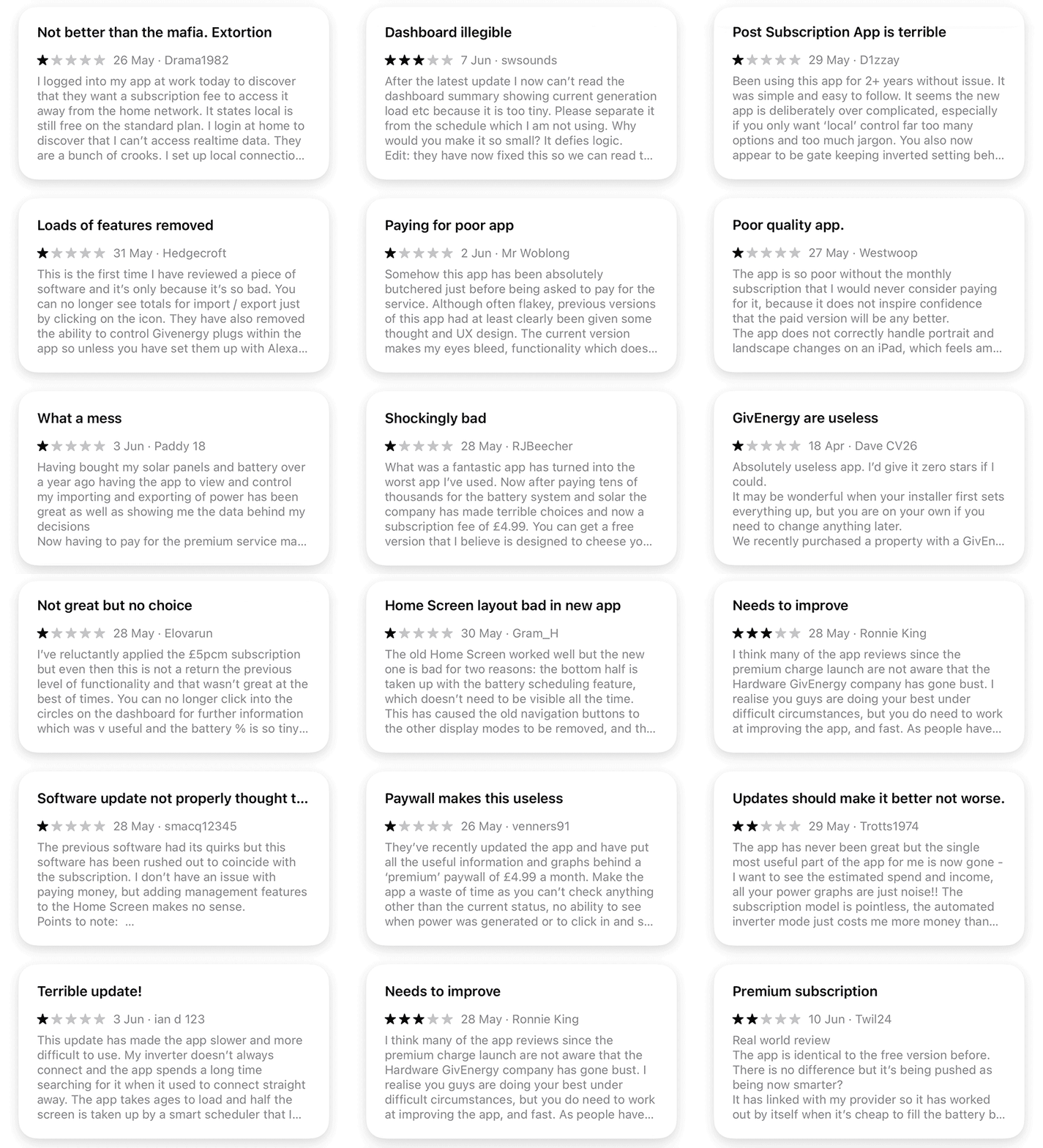
But the recent app update changed much of this. Gone is the simple interface for controlling day-to-day function of the system. These once clear and easily accessed controls are now buried deep in the app (so deep that, judging by recent reviews, many believe these tools have been removed).
The controls have also been redesigned – or rather undesigned – in a way that a knowledge of back-end-coding parlance is now required to feel comfortable using them.
For example, viewing a current setting involves clicking ‘Read’ while saving a new setting involves clicking ‘Write’. Both are terms that inhabit the lands of staging servers and GitHub rather than the landscape of consumer-facing UX design.
But the worst move of all is that the useful historical stats – such as how much power was generated yesterday, or last week, or last year – along with a range of other functions have been placed behind a paywall billed at a whopping £4.99 per month.
The key aim of a home-generation system is often to save money on electricity. Coughing up a chunk of that saving to see your own data goes strongly against the grain for me and the countless people in the backlash against GivEnergy’s ill-conceived changes.
I guess when someone at GivEnergy ran the numbers they saw the rising cost of storing and serving up data, and figured this needed to be paid for.
But the best way to pay for it is by viewing the situation as a marketing opportunity, not a monetisation opportunity.
In the case of GivEnergy, throwing a paywall in front of what has long been free – and in front of what they perceived as high-value content or functionality – could actually cost them more than they make.
Any move to charge for what was once free will cause upset. But doing so at the same time as making the system or service worse than it was before guarantees a backlash. So, GivEnergy’s only success is scoring two own goals at the same time.
Consider what the alternative could have looked like.
The app is central to users’ experience of the GivEnergy system. In fact, unless users go into their garage or loft to stare at the blinking LEDs on their inverter, it’s the only way users experience the GivEnergy system.
So, what if GivEnergy had made the app the easiest to use, most useful, most elegant of its kind? What if, in the face of the onslaught of subscriptions and paywalls, they promised the app would be free forever?
What would that do for retailers and installers looking to sell or specify home-generation tech: would it make them more or less likely to choose GivEnergy? And what effect would it have on users telling friends about their home-generation system?
What direction would it sway users seeking to expand their so-called ecosystem: towards choosing more GivEnergy kit, or towards a different brand (which may come with a different app and potentially an app subscription cost)?
Unfortunately, GivEnergy flicked the switch in the wrong direction.
Charging a fee that no-one seems willing to pay but everyone is triggered enough to rant about generates nothing but ill feeling.
Flick the switch the other way, and you grow a base of loyal customers, fans and advocates – and far more of that sought-after revenue.